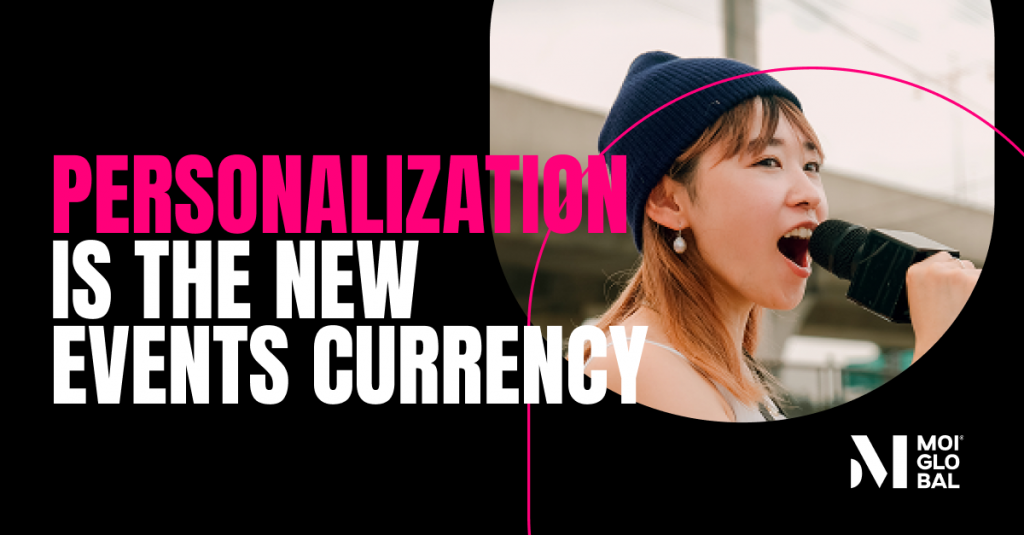
If we were playing buzzword bingo, I think we can all agree that “personalization” would take prime position on the grid. It’s easy to say, not quite so easy to deliver.
But in B2B events, it’s no longer optional. It’s the difference between a gathering that fades into the abyss and an experience that builds real business momentum.
At MOI Global, we’re seeing it every day. When brands design events around people instead of agendas, they win attention, build stronger relationships, and move deals forward faster.
Sure, it might be 2026’s favorite buzzword, but it’s also pretty powerful when done right.
Why personalization matters
Today’s decision-makers are overloaded, overwhelmed, and… well… over it. Their time is stretched and their inboxes are full. If you want them to show up and stay engaged, your event has to do more than just tell them stuff. It has to feel relevant to them.
Here’s where personalization can be misunderstood. It isn’t as simple as adding a name to a badge or tagging a “Dear [First Name]” onto the beginning of an email. Because let’s face it: that’s not making anyone feel seen or special.
It’s about creating an experience that reflects an attendee’s goals, challenges, and priorities. It’s about making them feel understood as a person, not just a stakeholder.
When that happens, people stop attending events and start participating in them.
They connect, they share, they follow up. And that’s when real business begins.
Moving from mass to meaningful
Personalization doesn’t have to be complicated. It starts with intention and a little smart design thinking.
- 1. Know your audience before they arrive
Use registration data, CRM insights, and sales input to understand what attendees actually want to achieve. Build your agenda around those needs.
- 2. Give people control
Let attendees build their own content paths. Offer choices between breakout sessions, roundtables, and tailored networking so that everyone leaves feeling they spent their time well.
- 3. Curate connections, not just crowds
Use intelligent matchmaking to connect people who can help each other. Quality beats quantity when it comes to networking.
- 4. Add a human touch
Personalization isn’t only digital. Small gestures like remembering a preference, welcoming someone by name, or designing quiet zones or reflection areas are what make experiences feel human.
- 5. Keep it going after the event
Personalize the follow-up. Share content based on what sessions people attended, what they asked about, or who they met. Continue the conversation rather than starting over.
Take it even further with technology
Personalization is always human-first. That’s the whole premise of it. But the right tools have the power to amplify, scale, and take your efforts even further. Event apps, smart registration systems, and CRM integrations can all help personalize at scale.
The key is connection. By linking your event tech to your marketing ecosystem, every insight feeds back into the bigger picture.
When technology and empathy work together, you can deliver scale without losing authenticity.
The future of events is personal
Success in events isn’t about scale, spectacle, or even spend. It’s about relevance. As audiences grow more selective, personalization becomes the true differentiator, turning brand interactions into meaningful moments that spark lasting relationships.
When attendees feel seen and understood, they engage better, stay longer, and remember exactly how you made them feel. In business, that often translates into action.
At MOI Global, we’re helping brands do this every day, designing experiences that blend data, creativity, and empathy to create something that feels personal, even when it’s global. It’s B2B events, made not-so-B2B.
If you’d like to explore how personalization can turn your next event into a growth engine, get in touch with our team.