What could possibly make over 60,000 Reddit users upvote a photo of chives? And not just once, but every day, for over two months?
It’s hard to say what any of us expected when Redditor u/F1exican began posting daily photos of finely chopped chives to r/KitchenConfidential. The question was always the same: Are they perfect yet? The first few days, no one noticed. By day five, a few hundred people had started checking in. By day ten, a full-blown community had formed. Seventy days later, it had turned into a strange, viral internet phenomenon.
Somewhere along the way, it stopped being about the chives.
Building a community
The same cup of chives, posted again and again, with small but noticeable changes. A bit more precision one day, a cleaner edge the next. People commented with knife advice, angle adjustments, paper towel positioning. Another user mailed him a new homemade cutting board.
There was something deeply human about it. Maybe it was the fact that he was actually trying; he really wanted to know when his chives were good enough. And he was willing to take the time to learn. The smallest improvement became a shared win. The tiniest misstep, a collective moment of coaching.
You could say this is what authenticity looks like, but that word doesn’t quite capture it. It wasn’t about being raw or real. It was about being open. Open to correction, open to the process, open to the crowd.
And once a crowd has something to care about, even a little bit, they tend to make it their own.
Soon, it wasn’t just about knife skills anymore. The community took it further. They created memes, inside jokes, critiques that became weekly rituals. One user, u/KarmaKrazi, became the de facto judge of chive quality, editing each photo with red lines and arrows, highlighting “problem areas” like the Reddit version of a Michelin inspector.
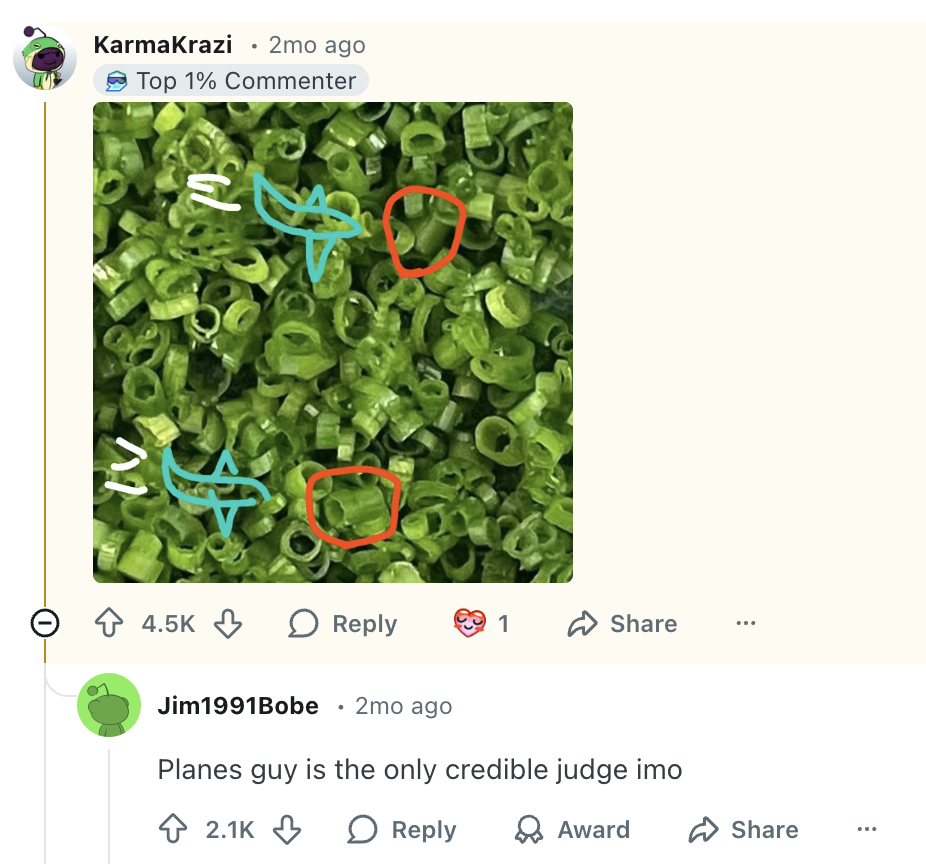
Every photo became a sort of challenge. Every comment is another brick building the community. The tone shifted from encouragement to performance, from performance to tradition. People showed up not to see if the chives were better, but to weigh in, take part, and keep the story going.
Breaking a community’s trust
On Day 31, someone noticed the photo looked familiar. A quick search found it was Day 23’s photo, just mirrored. A quiet disappointment set in, followed quickly by chaos. Posts from other subreddits came pouring in. Someone labelled it Chivegate. Another made a flowchart. Memes followed, then meta-memes. Even Reddit’s official X account got involved.
The betrayal felt oddly personal. It wasn’t the reuse of the photo that broke people’s trust, it was the shared promise of improvement. People trusted that u/F1exican wasn’t editing out the badly cut chives, reusing photos, or showing a photo from someone else. The project only worked if it was honest instead of perfectly polished.
u/F1exican posted an apology, his car had broken down and he didn’t want to miss a day. So he reused the photo. And he was forgiven by Reddit, a notoriously judgemental group of internet users. It was, thankfully, not the end of the series. If anything, it was the most human moment of all.
Brands often don’t get that luxury. The margin for error is significantly smaller, partly because trust is harder to build in the first place. People are automatically skeptical of brands online, making accountability all the more critical. If brands want to tap into the power of the cultural moment, they need to understand that this isn’t just another channel or marketing tactic. It’s a sensitive relationship that needs to be nurtured. In other words, you can’t just force your way in.
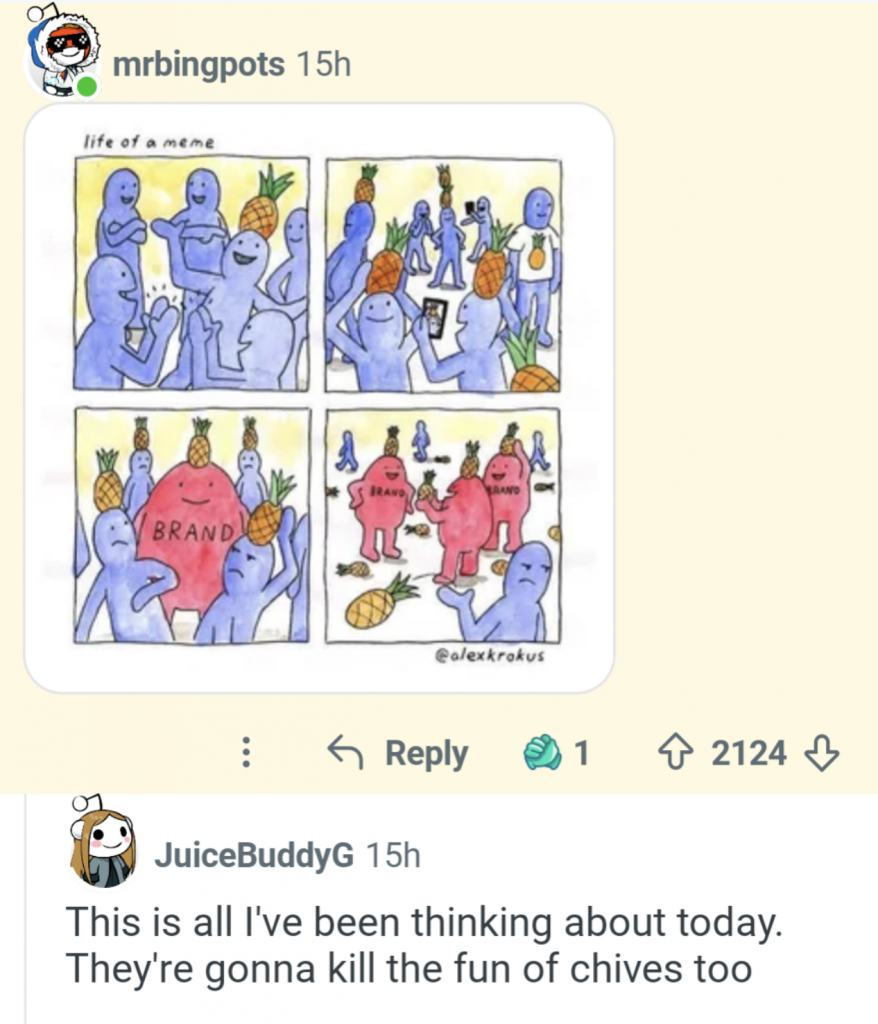
Showing up the right way
Somewhere around Day 40, a Philadelphia Cream Cheese ad appeared in the subreddit. It didn’t try to hide what it was: a photo of a tub of cream cheese. The caption read:
“Some heroes chop chives every day until Reddit says they’re perfect. We whip ours into cream cheese.”
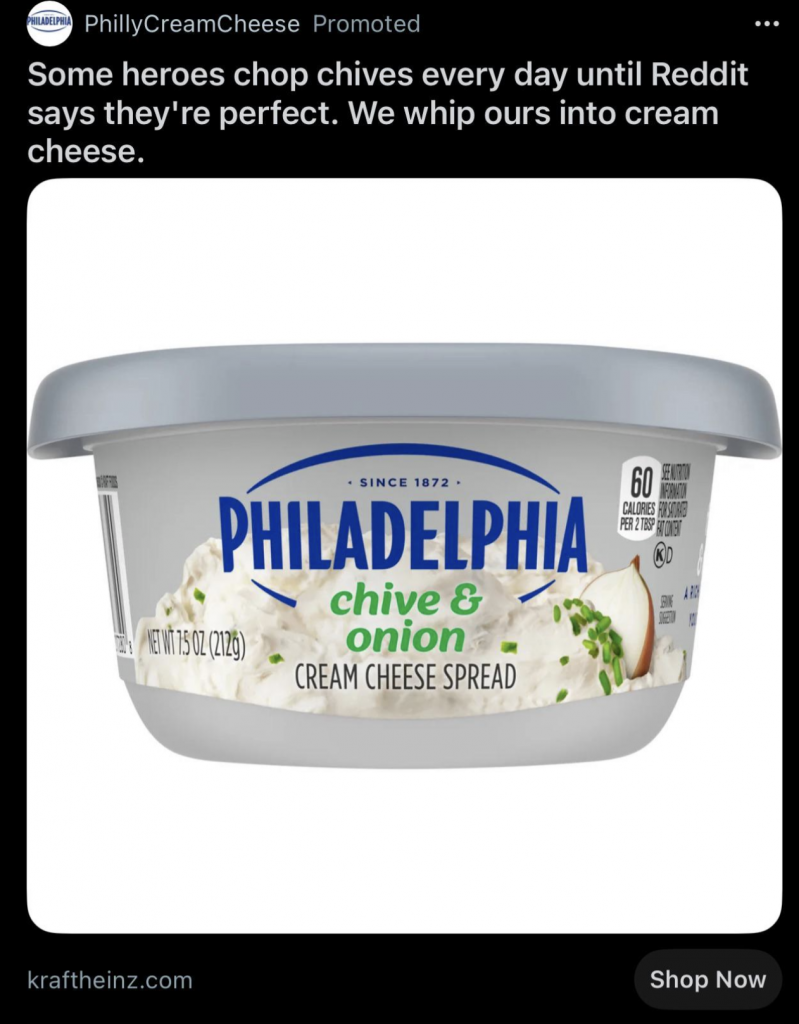
Now, take note of how Philadelphia made themselves culturally relevant. They didn’t brand the moment or drown it in ad-speak. They quietly contributed, showing they understood the context and respected the tone. And as a result, the community didn’t reject it. They played along. Even u/KarmaKrazi joined in, circling the chives on the product label with his usual commentary.
It worked because it didn’t try too hard. And more importantly, it worked because the brand didn’t pretend it was something it wasn’t.
So what can B2B learn from all this?
It’s a valid question. Because how does a cup of chives create the kind of community that so many B2B brands strive for? The lesson isn’t about “user-generated content” or “real-time marketing.” It’s simpler than that. If you want to be part of a community, you must participate in it. You have to speak its language, know its jokes, and respect the rules.
And when the moment comes to say something, say less than you think you need to. Then listen.