I want you to think of a brand moment that made you laugh this year. Now ask yourself: did you check the comments section? I’m willing to bet you did.
All it takes is a short scroll on Instagram or TikTok to see that the way brands use humor in marketing is shifting. Where humor once lived in the clever punchline, witty script or comically timed stunt, today it lives in comments, threads, and remix culture. Social media has created a space where audiences can become active participants; not just receiving the joke, but building on it, subverting it, and sometimes completely hijacking it at the brand’s expense.
Thanks to social media, the wall between brand and audience is breaking down. And as a result, it’s completely reshaping how brands influence and engage with their customers.
From observer to participant
Social media may have changed how content looks, but more importantly, it’s changed how it behaves. Algorithms and feeds have been built to reward active engagement and punish passive views. Simply being seen is no longer enough to get brands noticed. They need participation.
Luckily, today’s audiences are more than happy to oblige. Whether roasting brands, tagging their friends, partaking in trends or creating memes out of poorly timed screenshots – customers are going from observer to participant, shaping the story in a way that brands are no longer in control of.
Now, understandably, that can sound a little scary. When the audience takes over, you lose control. The joke could miss. It could sting. You could look ridiculous and risk the entire brand image you’ve spent years building. But in a world where audiences crave interaction and conversation more than ever before, that’s where the real opportunity lies.
The opportunity in letting go
Many of us are familiar with the quote: “Your brand isn’t what you say it is. It’s what they say it is.”
This has always been a tough pill to swallow for marketers. We spend years refining our brand image, our brand voice, aligning it with our values…and then realize that we can’t ever really control how audiences perceive us. We can only help guide and shape that perception with how and where we show up.
Social media didn’t invent this challenge. It just scaled it to new heights.
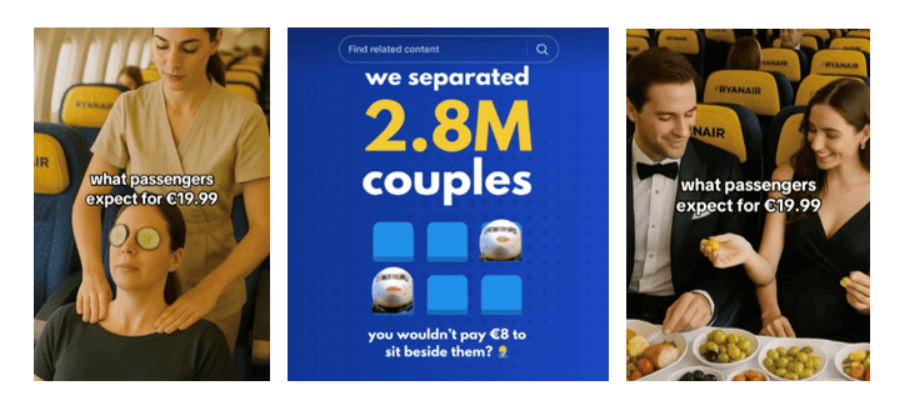
Brands like Wendy’s, Duolingo and Ryanair have all figured that out already. Across digital platforms, they’ve built their brands around audience interaction, offering themselves up as bait for their customers to have fun with them. They don’t try to out-funny the internet or force a certain narrative. Instead, they give their audiences something to play with. And it’s this participation and unapologetic self-awareness that’s become core to their brand identities, turning customers into fans.
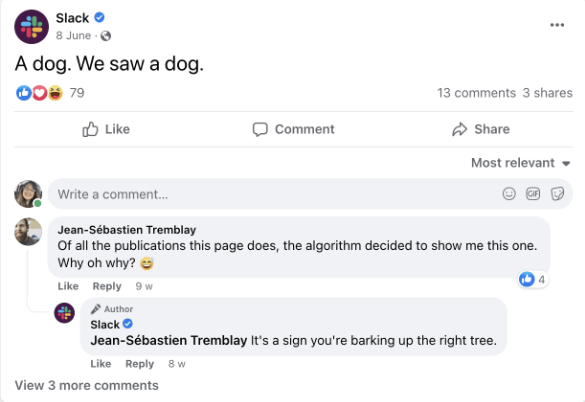
This isn’t unique to B2C, either. Take Slack, the work communication platform. Their product is functional and practical. And yet, their marketing is far from it. With playful social media posts, polls, and clever community building, Slack uses humor in a way that feels relevant, sincere and interactive. They aren’t afraid to poke fun at the not-so-glamorous side of work life, and the audience runs with it.
The future of B2B is interactive
None of this is to say that B2B brands should be taking a leaf out of the “Duolingo playbook”. Because let’s face it: that just wouldn’t work. B2B isn’t B2C. It’s more complex. Journeys are longer, buyer groups are bigger, and influencing buyers takes more than a viral social media moment.
However, I do think there’s a clear shift that we all need to recognize: audiences today are craving interactions that feel real. Humor plays a part in that, but it’s also about vulnerability and authenticity. By showing up in ways that feel less scripted and more human, brands are creating influence in new ways – the kind that creates meaningful mindshare in markets that are overcrowded with polished sales pitches.
And that’s the point, isn’t it? Creating experiences that resonate and build trust, so that when your audience is ready to buy, you’ll be top of mind.